

A melanin question is where the layers of skin earn their place in a consultation. The client points at a patch that a serum has not moved, or at tone that looks even in the mirror and uneven in a photo. Room light cannot tell you whether that pigment sits in the outer layer or deeper. Naming the depth, then showing it, is what turns a vague pigment complaint into a plan the client can follow.
Request a product tour to see how imaging separates those pigment depths on a live face, before you choose a system for the room.
This guide is for the visit itself. It covers how a practice places a melanin complaint, which ImagePro finding to show, and which product conversation belongs with that finding. The buying test lives in the melanin measurement guide. The biology of pigment lives in the melanin skin guide. The labeled anatomy lives in the layers of skin explainer. Stay here for the conversation.
Why Melanin Skin Needs a Depth in the Chair
Most stalled pigment plans fail at the match, not at the product. A client has been using a surface brightener for a mark that the capture places deeper. Or they have been booked for a stronger plan when the visible mark is still in the outer layer. Either mismatch wastes the visit and the follow-up note.
Depth is also how you set a fair clock. A surface mark and a deeper mark should not share one promise. The National Cancer Institute’s SEER training on skin layers describes the outer epidermis as a protective layer, with the dermis and subcutis beneath it. That public anatomy is enough for the script. You do not need a lecture. You need the client to see which depth their pigment question belongs to.
Melanin makes that placement harder, not optional. Pigment sitting in the outer cells can hide a sun pattern that ordinary room light never shows. A note that only says the tone looks even, with one small mark, does not record depth. The next provider reads that note and starts the visit over. A capture either fixes that handoff or it does not.
Keep the words plain enough for the person in the chair. Say “outer layer” and “supportive layer” if those phrases land better than the Latin names. Then tie each word to one finding you can point at on the screen. A consultation that cannot point at a finding is only a pitch. A consultation that can point at one finding is a plan.
Write the depth word on the visit note before you open a treatment menu. That line keeps the next provider from restarting the explanation. It also gives the client a phrase they can repeat at home. If two providers would place the same patch at two depths, the script is not ready. Agree on the placement before the first live visit. Use three recent pigment charts as the test.
Time the explanation so it stays short. Ninety seconds is enough to cover the two pigment depths and the one depth that matches this visit. Past that point, the client is waiting for the picture. Hold the longer biology for the person who asks for it, and send them to the melanin guide rather than expanding the visit.
Place the Melanin Complaint on the Layers of Skin
Start with the sentence the client actually used, not with the device menu. Write the pigment complaint in their words, then place it at a depth. A patch that showed up after a breakout, a mark that a serum has not moved, and tone that looks different in photographs are not the same visit. Each of those complaints still needs a depth before it needs a product recommendation.
Use this short sorting pass before you recommend anything. It keeps the pigment question ahead of the product menu:
- Repeat the pigment concern in the client’s words and confirm you heard it.
- Ask when it appeared, and what they have already tried on it.
- Place the mark in the outer layer or the supportive layer, and do not guess.
- Name one finding you will look for in the capture, not three.
- Say what the image can and cannot decide before you name a plan.
That order protects you from the common leap. A client who says “this spot will not fade” has not asked for a specific device. They have asked why the last plan missed. The capture is how you earn the right to be specific.
Listen for the clock inside the complaint. A mark that appeared last week is a different visit from a patch the client has watched for two years. A sudden darkening after a new product can still belong at the outer layer. A mark that has ignored careful home care belongs in the capture before anyone names a deeper plan. The start date tells you whether to change home care or to open a device conversation.
Also ask what they hope the next photograph will prove. Some clients want permission to stop using a product. Others want a reason to start a stronger plan. Say which of those outcomes the finding can support, and which outcome it cannot support. A clear no is part of a good consultation. It keeps a surface mark from being sold a deeper treatment it does not need.
Do not collapse every brown area into one word. Epidermal pigment and dermal pigment are different findings, and the visit should say so. The skin diagram guide owns the labeled map if the client wants it later. In the chair, name one depth and show it.
What Imaging Shows on Melanin Skin
A consultation has room for one map, not a full chapter. Show the depth that matches the pigment complaint, and then stop. The strata, the cell types, and the condition lists already live on the anatomy post and the melanin posts. Repeating those lists in the chair turns the client into a student.
What belongs in the visit is the link between the mark and a depth, plus the imaging tool that can show that link on the screen.
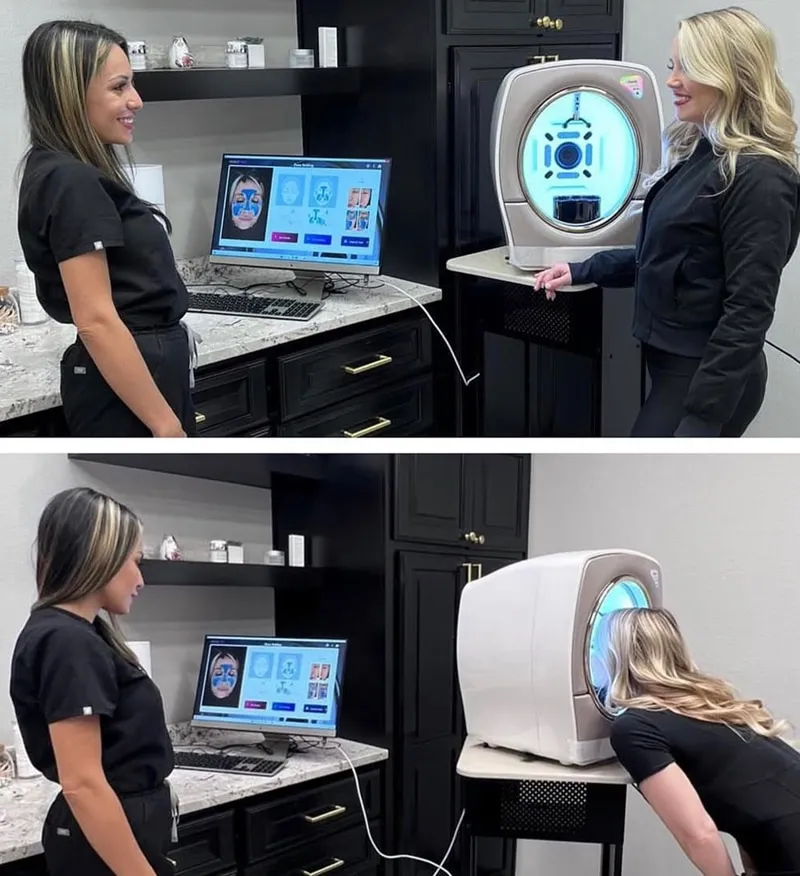
ImagePro systems on the skin imaging systems page use normal, polarized, cross-polarized, and UV light. The ImagePro Halo page says its analysis covers eleven items. Those items include pores, wrinkles, epidermal pigment, dermal pigment, skin tone, texture, and hydration.
Halo also lists a retractable hood and a QR code so the client can open the analysis on a phone. Those are product facts from that page. They are not a promise that a photo equals a diagnosis.
| Melanin question | Depth to name | What the capture can show | What not to claim |
|---|---|---|---|
| A new mark after a breakout or a product. | This often sits in the outer layer, so confirm it on the capture. | Halo can list epidermal pigment as its own item. | A photo does not name the cause of the mark. |
| A patch a serum has not moved. | It may sit in the outer layer or the supportive layer, and the capture decides. | Halo can list epidermal and dermal pigment apart. | Light modes do not diagnose the mark. |
| Tone looks even, but photos do not. | Look at the capture before you place the tone at a depth. | UV and polarized views can show what room light misses. | A crisp photo is not the same as a clinical exam. |
| The client wants one cream for every spot. | Split the spots by depth before you name any product. | Show one labeled finding instead of a brown blur. | Do not promise that one product will clear both depths. |
Read the table as a script, not a protocol. If the finding and the complaint disagree, believe the exam and say so. Imaging is there to make a careful explanation visible. It is not there to overrule the person in the chair.
Practice the rows out loud before you use them. Each cell should be one sentence a new team member can say without notes. If a row only makes sense with a caveat, put the caveat in the last column. The visit gets sloppy when the warning lives in someone’s memory.
Do not add a row for every device you sell. The table places the pigment. Device choice comes after the depth is named, and only if the finding asks for it. A table full of product names is a price sheet. Clients notice, and they stop trusting the picture.
Build the Visit Around One Pigment Finding
A strong visit has four beats. Give each one a bold lead so a busy room can scan the script without rereading a paragraph:
- Capture first. Take the image while the client can still see the untouched photo.
- Name one finding. Point at one pigment finding, using the client’s own words.
- Match the depth. Tie that finding to one depth and to one next step.
- Book the return. Set the date you will look again, before they leave the room.
Halo can send that analysis by QR code, which the Halo page describes as a way for the client to open the report on a phone or by email. Use it when Halo is the system in the room. The photo should not stay trapped on your monitor. A client who leaves with a picture and a depth word will remember the visit. A client who leaves with a verbal menu will remember the price.
Keep the next step narrow, and match it to the depth you just named. One finding gets one plan.
An outer-layer finding can support a facial plan. The Préime DermaFacial is the multi-modality facial system for that surface conversation. Emage Medical is the exclusive U.S. distributor of the Préime DermaFacial system. Say that only about this system. Do not stretch it to other lines.
A finding the capture places in the supportive layer is a different conversation. It can point to professional microneedling on the microneedling technology page. Do not stack the facial and the microneedling plan in the first visit unless the finding truly asks for both.
Say the window out loud, as a planning range and not as a result. A surface mark can be rechecked sooner than a deeper pigment plan. Write the date on the leave-behind. A plan without a date is a suggestion, and suggestions do not survive the parking lot.
Assign the beats if more than one person is in the room. One person runs the capture and names the finding. One person matches the depth and books the return. Write the role on the visit card so a busy afternoon does not invent a new script.
Close the loop the same day. Note the depth word, the single finding, and the date before the next client sits down. A note written at day’s end loses the phrase the client heard. If the QR report and the chart disagree, fix the chart to match what was said.
Choose the Capture for Pigment Questions
Owners who are still choosing a system should judge it on melanin questions, not on a feature list in the abstract. The consultation script above works once a capture can separate the two pigment labels. The hardware choice is about which of those questions your clients already ask.
ImagePro Halo is the page that publishes the eleven-item list, with epidermal pigment and dermal pigment as separate items. It also publishes the QR report and the retractable hood. A room that often has to tell a surface mark from a deeper one should look at how Halo labels those two items on a live face. Confirm the labels on a demo, not on a slide.
The ImagePro SUNLITE page describes normal, parallel polarized, cross-polarized, and UV light, plus a retractable hood and a printed plan after the consultation. Its concern list includes sun damage and hyperpigmentation. A room that mostly needs the client to leave with a printed plan can start there. SUNLITE’s page does not publish the same eleven-item pigment split, so do not borrow Halo’s list for it.
Image Pro HYBRID’s page describes dual light sources, Zeon flash lamps and LED, for color and UV detail. It does not publish a QR report or the eleven-item list. Do not say Hybrid sends a QR analysis. If color on deeper skin is the worry, ask to see Hybrid’s normal-light frame on a face that matches your clients. A crisp frame that shifts the client toward gray will not earn trust for the marked-up views that follow.
Compare the live systems on a tour. Ask to see epidermal and dermal pigment labeled apart, and ask to see a UV view of a sun pattern that room light missed. If the screen never changes the sentence you would write, it is not earning its place. The measurement guide covers that buying test in full. This section only ties the choice back to the visit.
Keep the Pigment Explanation Honest
Three claims sink this kind of visit. The first is that a photo diagnoses a condition, which it does not. The image shows what the chosen light and the software were built to display. The second is that a clearance on a treatment device proves the result the client wants. Clearance is a regulatory fact about a device, not a promise about their face. The third is a revenue or outcome number you have not been authorized to publish, so leave those numbers out.
Separate epidermal pigment from dermal pigment whenever the software does. Halo lists them as different items. Collapsing them into “dark spots” sends the client home with the wrong clock and the wrong product. If you are not sure which item you are looking at, say that and look again. Do not guess in front of them.
Financing and monthly terms need their own approved language. Do not invent a payment offer to close the visit. If the client asks what a system costs to bring in, point them to a product tour and let that conversation use the current, approved terms. The consultation’s job is the depth match, not the contract.
Train the room on one script. The person who captures the image and the person who recommends the plan should use the same depth words. Mixed language is how a careful visit turns into two stories. A shared card with the two pigment depths, the four beats, and the claims you will not make is enough.
Review five pigment visits a month against that card. Look for the depth word in the note, the single finding that was named, and the return date. A missing date is a failed handoff, even if the client bought something. A second finding added “while we were here” means the script is drifting. Fix the card, not the person, unless the same person skips it twice.
Keep regulatory wording on the treatment devices exact, and off this script unless the client asks. If they ask whether a device is cleared, answer from that device’s page. Do not stretch a clearance into a result. The imaging visit shows depth. It is not a study of a treatment you may recommend later.
Review the ImagePro skin imaging systems before you decide which capture belongs in a melanin consultation, and which finding your clients already ask to see.
Frequently Asked Questions
How do the layers of skin change a melanin consultation?
They give the mark a depth. Place the complaint in the outer layer or the supportive layer, show that finding, and stop. A lecture on pigment biology belongs in the melanin guide, not in the chair.
Can imaging separate epidermal pigment from dermal pigment?
ImagePro Halo lists epidermal pigment and dermal pigment as separate analysis items. Use those labels when you talk about a mark. Do not treat the image as a diagnosis, and do not merge the two items into one product.
Which Emage system fits a surface pigment finding?
A surface finding can support a facial plan. Préime DermaFacial is the system to discuss when the visit is about the outer layer and a multi-modality facial is in scope. Emage Medical is the exclusive U.S. distributor of that system. A finding placed deeper is a different conversation, often microneedling, and should not be added by default.
What should the client leave with?
One photo, the depth word you used, and the date of the next look. On Halo, the page describes a QR code that opens the analysis on a phone. If you cannot name the finding in one sentence, the visit is not ready for a recommendation.
Where do we test a camera before we buy?
Use the melanin measurement guide for the demo. Ask to see the two pigment labels apart, and a UV view that room light missed, on a face that matches your clients. This article is the visit script once that system is in the room.